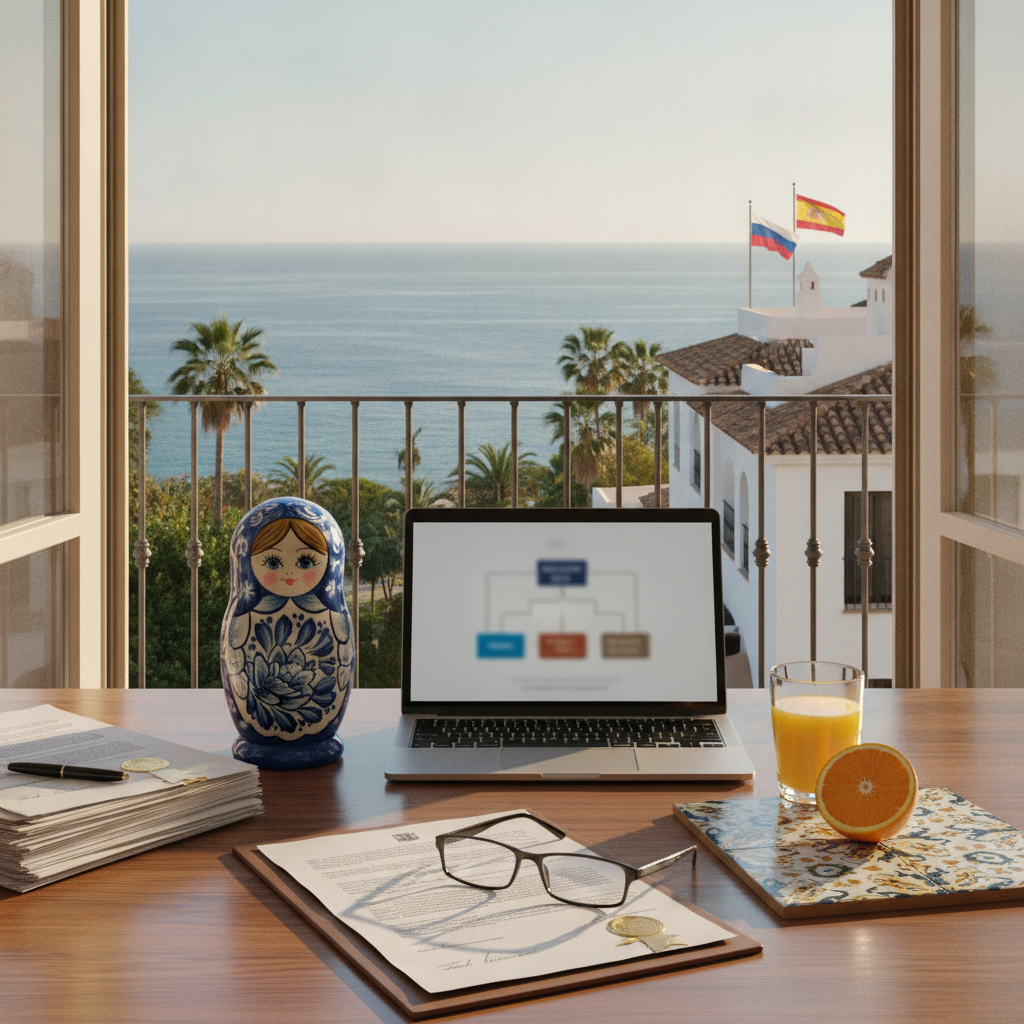
The allure of the Costa del Sol is undeniable. From the golden sands of Marbella to the vibrant cultural hub of Malaga, southern Spain offers a quality of life that is difficult to match anywhere else in Europe. For many non-EU citizens, including those from Russia and other countries, the dream of living under the Mediterranean sun often begins with a specific legal process. If you have sufficient means to support yourself without working in the country, learning how to obtain the non-lucrative residency in Spain is your first step toward making this dream a reality.
My name is Victoria Malkova, a lawyer based in the heart of the Costa del Sol. I specialize in helping international clients navigate the complexities of Spanish immigration law. In this guide, I will break down everything you need to know about the Non-Lucrative Visa (NLV), the requirements involved, and the specific steps we must take to ensure your application is successful.
What is the Non-Lucrative Residency?
The Non-Lucrative Residency (Residencia No Lucrativa) is a unique authorization that allows non-EU foreigners to reside in Spain for a period longer than 90 days without engaging in any labor or professional activity. Essentially, it is designed for retirees, individuals with significant savings, or those who receive passive income from investments, pensions, or rental properties located outside of Spain.
It is important to understand that while this residency does not allow you to work for a Spanish company, it provides you with the legal right to live in the country and travel freely within the Schengen Area. After the first year, the permit can be renewed, and eventually, it can lead to permanent residency and even Spanish citizenship.
Key Requirements: Financial Stability is Paramount
When clients ask me how to obtain the non-lucrative residency in Spain, the first topic we discuss is financial solvency. The Spanish government wants to ensure that you will not become a burden on the state’s social welfare system. To prove this, you must demonstrate that you have a specific amount of money in your bank account or a guaranteed monthly passive income.
The threshold is determined by the IPREM (Indicador Público de Renta de Efectos Múltiples). For 2024, the main applicant must demonstrate a monthly income equal to 400% of the IPREM. For each additional family member, an additional 100% of the IPREM is required. Many applicants choose to show a total yearly balance in their bank accounts that covers the entire first year of residency. Providing clear, legalized, and translated bank statements is a critical part of the process that we handle in my office to avoid common pitfalls.
Necessary Documentation and Health Insurance
Beyond financial proof, there are several other documents required by the Spanish Consulate. One of the most important is a private health insurance policy. This insurance must be provided by a company authorized to operate in Spain and must offer coverage equivalent to the Spanish National Health System, with no co-payments and no waiting periods.
Additionally, you will need to provide a criminal record certificate from your country of origin (or countries where you have lived in the last five years) and a medical certificate stating that you do not suffer from any diseases that could have serious repercussions for public health. For more detailed information on official requirements, you can consult the Spanish Ministry of Foreign Affairs website.
The Application Process Step-by-Step
Understanding how to obtain the non-lucrative residency in Spain involves a two-stage process. The first stage takes place in your country of origin at the Spanish Consulate. This is where we submit your initial application and all supporting documentation. The Consulate will review your file and, if approved, will issue a visa in your passport.
The second stage begins once you arrive in Spain, specifically here on the Costa del Sol. Within 30 days of your arrival, you must apply for your TIE (Tarjeta de Identidad de Extranjero), which is your physical residency card. This involves registering your address at the local town hall (empadronamiento) and visiting the police station for fingerprinting. As your lawyer, I guide you through both stages, ensuring that appointments are booked and forms are filled out correctly.
Why the Costa del Sol is the Perfect Choice
As a Russian-speaking lawyer living and working in the Costa del Sol, I have seen firsthand why this region is the top choice for those seeking non-lucrative residency. The infrastructure is excellent, the international schools are world-class, and the community is incredibly welcoming to foreigners. Whether you are looking for a quiet villa in Benahavís or a luxury apartment in Puerto Banús, the lifestyle here supports the "non-lucrative" philosophy of enjoying life to the fullest.
However, navigating the Spanish bureaucracy can be daunting, especially with the language barrier and the specific legal nuances of the immigration office (Extranjería). This is why professional legal representation is highly recommended. We ensure that your "cómo obtener la residencia no lucrativa en España" (how to obtain the non-lucrative residency in Spain) journey is smooth and stress-free.
Common Challenges and How to Avoid Them
One of the most frequent reasons for a visa denial is the failure to properly prove the source of funds or providing insurance policies that do not meet the strict criteria of the Spanish authorities. Furthermore, if you are a digital nomad, you might need to consider if the Non-Lucrative Visa or the new Digital Nomad Visa is better suited for your situation, as the NLV strictly prohibits working for any entity while residing in Spain.
Another factor to consider is tax residency. If you spend more than 183 days in Spain during a calendar year, you will likely be considered a tax resident. Part of my service includes a preliminary consultation on the tax implications of your move, ensuring you are fully informed before you make the transition.
Conclusion: Start Your Journey Today
Securing your future in Spain is a rewarding endeavor, but it requires meticulous planning and legal expertise. If you are researching how to obtain the non-lucrative residency in Spain, you have already taken the first step toward a new life. My office, Victoria Malkova Law, is dedicated to providing personalized legal solutions for the international community in the Costa del Sol.
From the initial collection of documents to the moment you hold your TIE card in your hand, I am here to represent your interests and bridge the gap between your goals and the Spanish administration. Contact us today to schedule a consultation and begin your application for the non-lucrative residency.