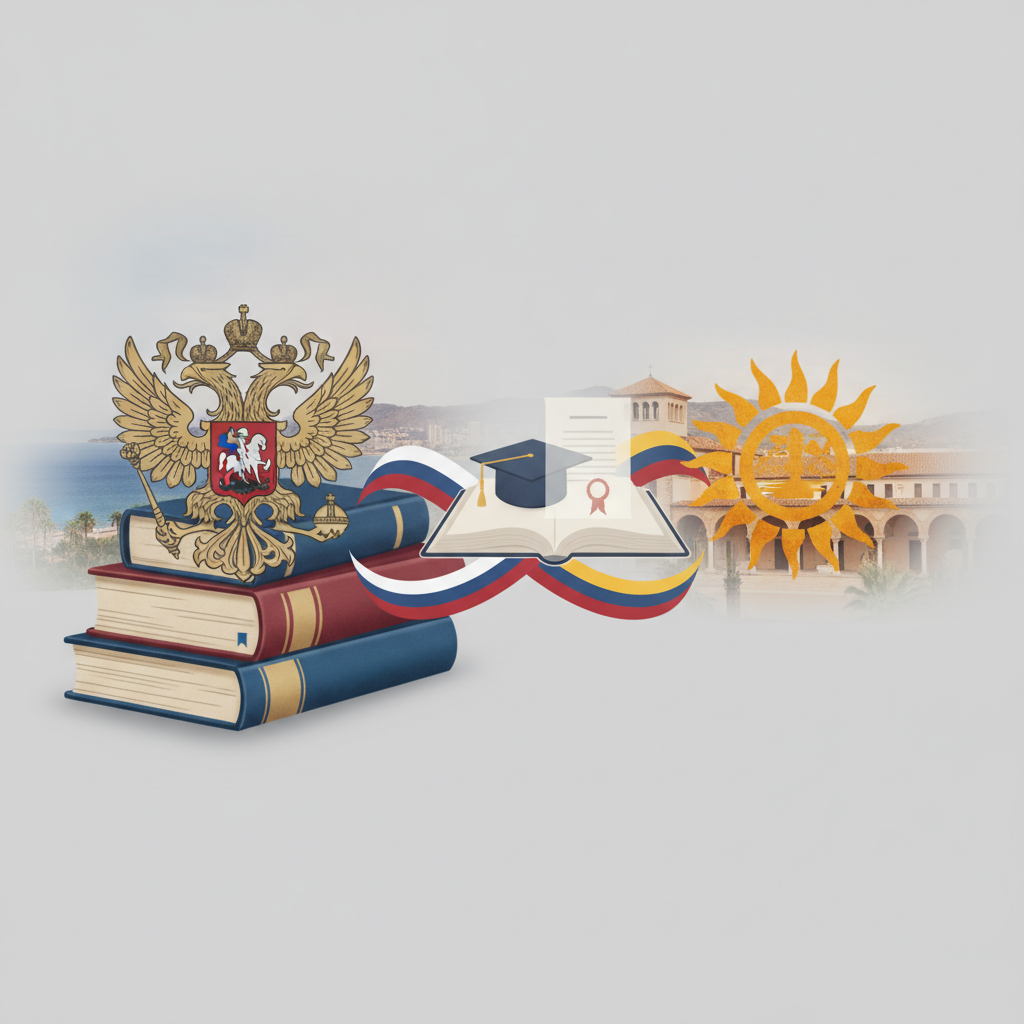
Relocating to the beautiful Costa del Sol is a life-changing decision that offers a wealth of opportunities, both personally and professionally. However, for many expatriates, particularly those arriving from Russia and other non-EU countries, one of the most significant administrative hurdles is ensuring their academic qualifications are legally recognized. My name is Victoria Malkova, a lawyer based in the Costa del Sol, and I specialize in guiding international clients through the intricate process of the homologation of university degrees in Spain.
Whether you are a doctor, engineer, teacher, or architect, your path to practicing your profession in Spain begins with a formal recognition of your studies. This process is not merely a translation of your diploma; it is a rigorous legal procedure that ensures your education meets the standards set by the Spanish Ministry of Universities.
What Exactly is the Homologation of University Degrees in Spain?
The term "homologation" refers to the official recognition of a foreign higher education degree as being equivalent to a specific Spanish degree that gives access to a regulated profession. In Spain, professions are divided into two categories: regulated and non-regulated. If your profession is regulated—such as medicine, law, or engineering—you must undergo the process of homologation of university degrees in Spain to be allowed to work legally.
For non-regulated professions, the process is slightly different and is known as "equivalence" (equivalencia). While equivalence grants your degree the same academic level as a Spanish degree (e.g., a Bachelor's or Master's level), it does not tie it to a specific professional title. Understanding which path to take is the first step in ensuring your career transition is smooth and legally compliant.
The New Legal Landscape: Royal Decree 889/2022
In recent years, the Spanish government has introduced new regulations to streamline the administrative burden. The Royal Decree 889/2022 was designed to modernize the procedure for the homologation of university degrees in Spain, introducing digital processing and setting specific timeframes for resolutions. Despite these efforts, the system remains complex, requiring meticulous attention to detail and a deep understanding of Spanish administrative law.
As a lawyer working closely with the Russian-speaking community in the Costa del Sol, I have seen many applicants face delays or rejections simply due to minor errors in their documentation. It is vital to stay informed through official channels, such as the Spanish Ministry of Universities, to ensure you are following the most current guidelines.
Essential Requirements and Documentation
To successfully navigate the homologation of university degrees in Spain, you must prepare a comprehensive dossier. While requirements can vary depending on the specific degree, the following documents are generally mandatory:
1. Proof of Identity: A valid passport or NIE (Número de Identidad de Extranjero).
2. The Diploma: Your original university degree or a certified copy.
3. Academic Transcripts: A detailed list of the subjects studied, the hours dedicated to each, and the grades obtained.
4. Proof of Language Proficiency: For certain professions, particularly in the health sector, you may need to demonstrate a B2 level of Spanish (DELE or SIELE).
5. Payment of Fees: Proof of payment of the "Tasa 079," which is the administrative fee for the processing of the application.
Crucially, all documents issued outside of Spain must be legalized. For Russian citizens, this typically involves the Hague Apostille. Furthermore, all documents must be accompanied by a sworn translation (traducción jurada) into Spanish, performed by a translator authorized by the Spanish Ministry of Foreign Affairs.
Common Challenges for Russian Graduates in Spain
For graduates from Russian universities, the homologation of university degrees in Spain presents unique challenges. The educational systems of Russia and Spain have historical differences in curriculum structure and credit systems. Sometimes, the Ministry may determine that there is a "deficiency" in your training. In such cases, you might be required to complete additional subjects at a Spanish university or pass a specific aptitude test.
Living in the Costa del Sol provides a wonderful environment, but being far from the central administration in Madrid can make it feel like you are disconnected from the process. This is where professional legal assistance becomes invaluable. We ensure that your application is submitted correctly through the electronic registry, monitor the status of your file, and respond to any "requerimientos" (requests for additional information) from the Ministry promptly.
How Victoria Malkova Can Assist You
My law firm is dedicated to providing personalized support to professionals who wish to validate their expertise in Spain. The process of homologation of university degrees in Spain can take anywhere from several months to over a year, and having a legal expert by your side can significantly reduce the stress associated with this waiting period.
We offer a full suite of services, including:
- Preliminary assessment of your academic profile to determine the best legal route.
- Assistance with the legalization and apostille of documents in the country of origin.
- Coordination with sworn translators to ensure your documents meet official standards.
- Submission and ongoing monitoring of your homologation file through the official digital platforms.
- Legal defense in the event of an unfair denial or excessive administrative silence.
Start Your Professional Life in the Costa del Sol Today
The Costa del Sol is not just a place for retirement or holidays; it is a vibrant economic hub where skilled foreign professionals contribute significantly to the local community. Don’t let administrative red tape stand in the way of your career goals. The homologation of university degrees in Spain is a hurdle, but with the right legal strategy, it is entirely surmountable.
If you are looking for a lawyer who understands the specific needs of the international and Russian-speaking community in Marbella, Malaga, or anywhere else in the Costa del Sol, I am here to help. Contact my office today to schedule a consultation and take the first step toward having your professional qualifications recognized in Spain.