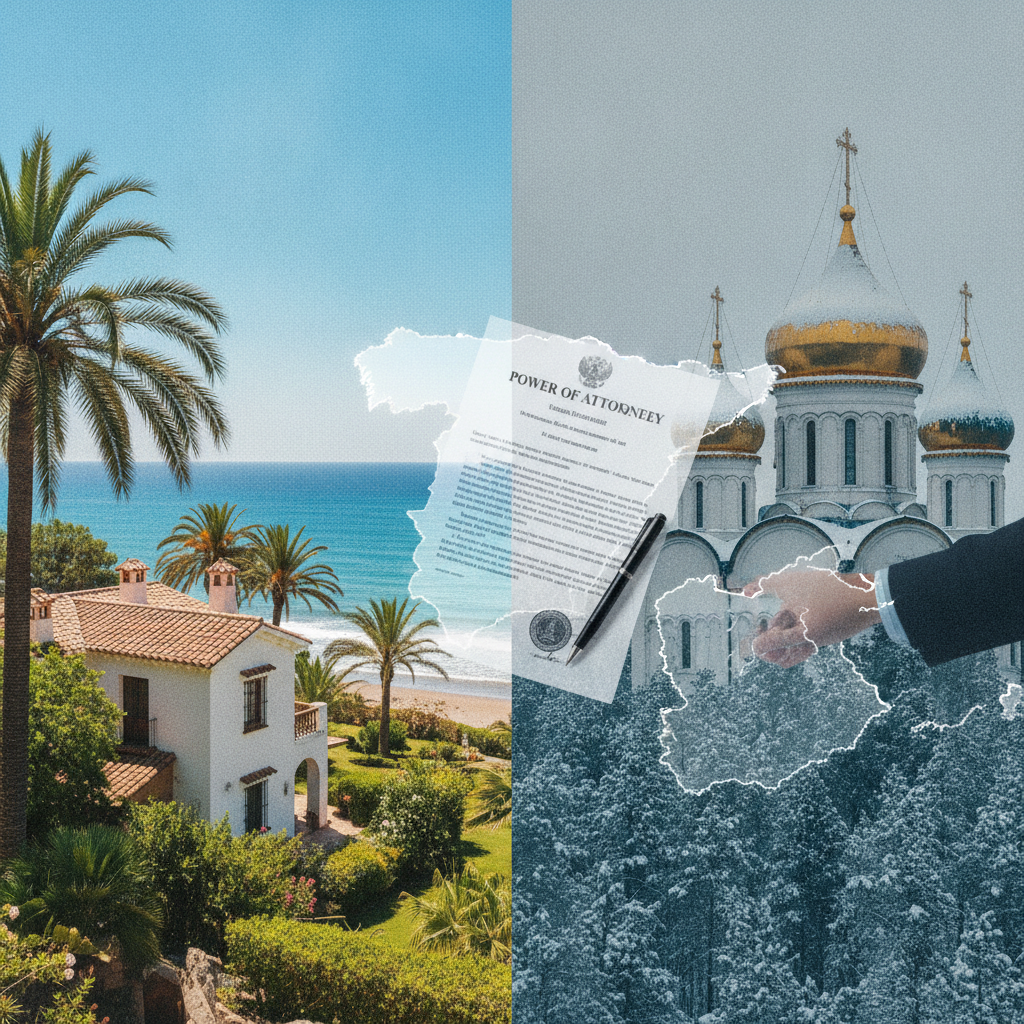
Inheriting property or assets in a foreign country can be an emotionally taxing and legally complex journey. For many Russian citizens and international clients who have interests in the beautiful Costa del Sol, the process of claiming an inheritance in Spain often arises at a time when traveling is not convenient or possible. As a legal expert based in Marbella, Victoria Malkova specializes in bridging the gap between Spanish legal requirements and the needs of international clients, ensuring that your legacy is secured without the need for constant travel.
One of the most frequent questions clients ask is how they can manage legal proceedings without being physically present in Spain. The answer lies in a specific legal instrument: granting power of attorney to accept an inheritance in Spain from abroad. This mechanism allows a trusted legal representative to act on your behalf, navigating the intricate web of Spanish bureaucracy, tax obligations, and notary requirements.
What Does it Mean to Grant Power of Attorney for Inheritance?
In legal terms, a Power of Attorney (POA) is a written authorization to represent or act on another's behalf in private affairs, business, or some other legal matter. When we talk about granting power of attorney to accept an inheritance in Spain from abroad, we are referring to a specialized document that gives your lawyer the authority to perform all necessary steps to finalize the probate process in your name.
In Spain, the inheritance process is not automatic. It involves several formal steps that must be executed before a Notary Public. These steps include the identification of assets, the payment of the Spanish Succession Tax, and the formal signing of the "Escritura de Aceptación de Herencia" (Deed of Acceptance of Inheritance). For those living in Russia, the UK, or elsewhere, performing these tasks personally would require multiple trips to the Costa del Sol and a deep understanding of the Spanish language and legal system.
The Essential Steps for Granting Power of Attorney from Abroad
If you find yourself in a position where you need to manage an estate in Spain while residing in another country, the process typically follows these stages:
1. Drafting the Power of Attorney
The document must be drafted carefully to include specific powers. A general power of attorney may not be sufficient for inheritance purposes. It must explicitly state the power to accept (or waive) the inheritance, apply for a Spanish Tax Identification Number (NIE), pay taxes, and register properties at the Land Registry. Victoria Malkova provides bilingual drafts (Spanish-Russian or Spanish-English) to ensure the client fully understands what they are signing.
2. Signing Before a Notary or Consulate
You can sign the POA in your current country of residence. This can be done at a local Notary Public or at the Spanish Consulate. If signed before a local notary outside of Spain, the document must be legalized to be valid in Spanish territory.
3. The Hague Apostille and Sworn Translation
For a document issued abroad to be legally recognized in Spain, it must carry the "Apostille of the Hague," an international certification that verifies the authenticity of the signature. Additionally, if the document is not in Spanish, it must be translated by an official sworn translator recognized by the Spanish Ministry of Foreign Affairs.
Why the Costa del Sol Requires Specialized Legal Assistance
The Costa del Sol, covering areas such as Marbella, Estepona, and Fuengirola, falls under the jurisdiction of the Regional Government of Andalusia. Spain’s inheritance laws are decentralized, meaning that the taxes and procedures can vary significantly from one region to another. Navigating the "Impuesto sobre Sucesiones y Donaciones" (Succession and Donation Tax) in Andalusia requires up-to-date knowledge of local exemptions and reductions, which can save heirs a substantial amount of money.
Victoria Malkova offers a personalized approach for Russian-speaking clients and international investors, combining local expertise in Andalusian law with an understanding of the international private law that governs cross-border successions. By granting power of attorney to accept an inheritance in Spain from abroad, you delegate the burden of dealing with the "Registro de la Propiedad" (Property Registry) and the "Hacienda" (Tax Agency) to a professional who is physically present in the jurisdiction where the assets are located.
Common Challenges When Inheriting from Abroad
Without professional guidance, several obstacles can delay or even jeopardize your inheritance:
- The NIE Number: Every foreign heir must obtain a "Número de Identidad de Extranjero" (NIE). This is a mandatory tax identification number. Your lawyer can apply for this on your behalf using the Power of Attorney.
- Deadlines: Spain imposes a strict six-month deadline from the date of death to settle inheritance taxes. Failure to meet this deadline can result in significant penalties and interest.
- Bank Accounts: Accessing the deceased's Spanish bank accounts requires specific legal documentation that proves your right to the funds.
- Translation Errors: Legal terminology varies greatly between the Russian, English, and Spanish legal systems. A mistranslated power of attorney can be rejected by a Spanish notary, causing costly delays.
How Victoria Malkova Can Help You
The goal of Victoria Malkova's practice in the Costa del Sol is to provide peace of mind. By managing the process of granting power of attorney to accept an inheritance in Spain from abroad, she ensures that every legal requirement is met with precision. Her services include:
- Comprehensive searches for wills in the Spanish Registry of Last Wills.
- Obtaining death certificates and certificates of insurance contracts.
- Drafting the Power of Attorney and coordinating with foreign notaries.
- Calculating and filing inheritance tax returns to maximize available tax benefits in Andalusia.
- Representing the heir at the Spanish notary for the signing of the Deed of Acceptance.
- Registering the change of ownership at the relevant Land Registry.
Inheriting assets in Spain does not have to be a bureaucratic nightmare. Even if you are thousands of miles away, the right legal framework allows you to honor the wishes of your loved ones and secure your property interests on the Costa del Sol. If you are in a situation where you need to manage an estate in Spain, contact the office of Victoria Malkova today to begin the process of granting the necessary powers to resolve your legal matters efficiently and professionally.