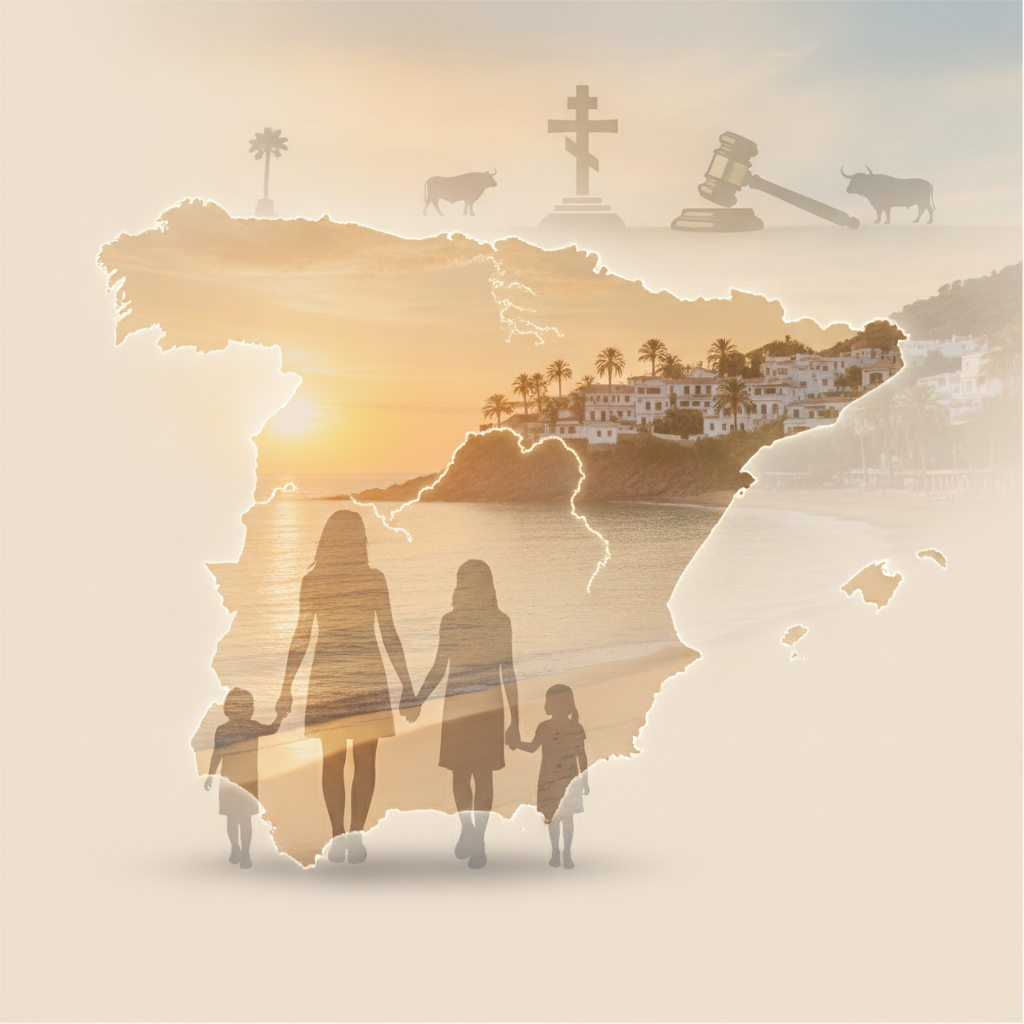
Living and working on the sun-drenched Costa del Sol is a dream for many international citizens. However, that dream is never truly complete until your loved ones are by your side. As a legal professional specializing in immigration law, I, Victoria Malkova, have assisted countless families in navigating the complexities of the Spanish legal system. One of the most sought-after procedures in my practice is family reunification in Spain for foreigners, a legal pathway that allows non-European Union citizens residing in Spain to bring certain family members to live with them.
The process of family reunification is governed by strict regulations and requires meticulous attention to detail. Whether you are based in Marbella, Malaga, or any other part of the Costa del Sol, understanding the legal framework is essential to ensure a successful application and avoid unnecessary delays or rejections.
What is Family Reunification in Spain for Foreigners?
The legal concept of family reunification in Spain for foreigners refers to the right of a foreign resident who has legally resided in Spain for at least one year and has obtained an authorization to stay for another year to bring their family members to the country. This process is designed to protect the family unit, a fundamental right recognized by both Spanish law and international treaties.
It is important to distinguish this process from the "Family Member of an EU Citizen" card. Family reunification specifically applies to "General Regime" foreigners—those who are not citizens of the European Union, European Economic Area, or Switzerland. For those living in the Costa del Sol, which hosts a diverse international community, including a significant number of Russian and non-EU expatriates, this distinction is crucial.
Who Can You Bring to Spain?
Under the current legislation regarding family reunification in Spain for foreigners, the "reunifier" (the person already living in Spain) can apply to bring the following relatives:
- Spouse or Partner: This includes a legal spouse (provided there is no de facto or legal separation) or a person with whom the resident maintains a relationship of affectivity analogous to marriage (registered domestic partners).
- Children: Children of the resident or the spouse, including adopted children, provided they are under 18 years of age or have a disability and are not objectively capable of providing for their own needs.
- Dependent Parents: Parents (ascendants) of the resident or their spouse, generally over the age of 65, when there are reasons justifying the need to authorize their residence in Spain. In exceptional cases, parents under 65 may be considered for humanitarian reasons.
Essential Requirements for a Successful Application
To successfully complete the process of family reunification in Spain for foreigners, the applicant must meet several stringent criteria. The Spanish authorities, particularly the Foreigners' Office (Extranjería) in Malaga, carefully scrutinize these applications.
First and foremost, the applicant must demonstrate sufficient financial means. You must prove that you earn enough money to support your family without relying on the Spanish social assistance system. Typically, this is calculated based on the IPREM (Public Income Indicator of Multiple Effects), where a certain percentage is required for each additional family member.
Secondly, you must provide proof of adequate housing. This involves obtaining a report from the local town hall (Ayuntamiento) or competent regional authority certifying that your home meets the health and habitability standards required for the number of people who will be living there. For residents in the Costa del Sol, this usually means dealing with the local municipalities of Malaga, Estepona, or Marbella.
Lastly, the family member being brought to Spain must not have a criminal record in Spain or in their previous countries of residence for offenses recognized under Spanish law. Comprehensive health insurance is also a mandatory requirement.
The Step-by-Step Process
The journey toward family reunification in Spain for foreigners begins in Spain. The resident must submit the initial application for a residence permit for their family members at the corresponding Foreigners' Office. Once the Spanish authorities grant the initial authorization, the family member in their country of origin has two months to apply for a residence visa at the Spanish Consulate.
For more detailed information on the official procedures and current regulations, you can consult the Spanish Ministry of Inclusion, Social Security and Migration, which provides updated guidelines for international residents.
Once the visa is issued, the family member must enter Spain within the three-month validity period of the visa. Upon arrival, the final step is to apply for the Foreigner Identity Card (TIE) at the local police station in the Costa del Sol.
Why Consult a Professional Lawyer?
The administrative burden of family reunification in Spain for foreigners can be overwhelming. As a Russian-speaking lawyer based in the Costa del Sol, I specialize in bridging the gap between foreign citizens and the Spanish administration. Mistakes in the application, such as insufficient financial documentation or incorrectly legalized certificates, can lead to denials that take months to appeal.
By working with Victoria Malkova, you benefit from a professional who understands both the local nuances of the Malaga province administration and the specific needs of the international community. My goal is to ensure that your family is reunited as quickly and smoothly as possible, allowing you to enjoy your life in Spain together.
If you are planning to bring your family to the Costa del Sol, do not leave your future to chance. Legal expertise is the key to navigating the intricacies of Spanish immigration law with confidence.
Victoria Malkova
Legal Consultant & Lawyer
Costa del Sol, Spain