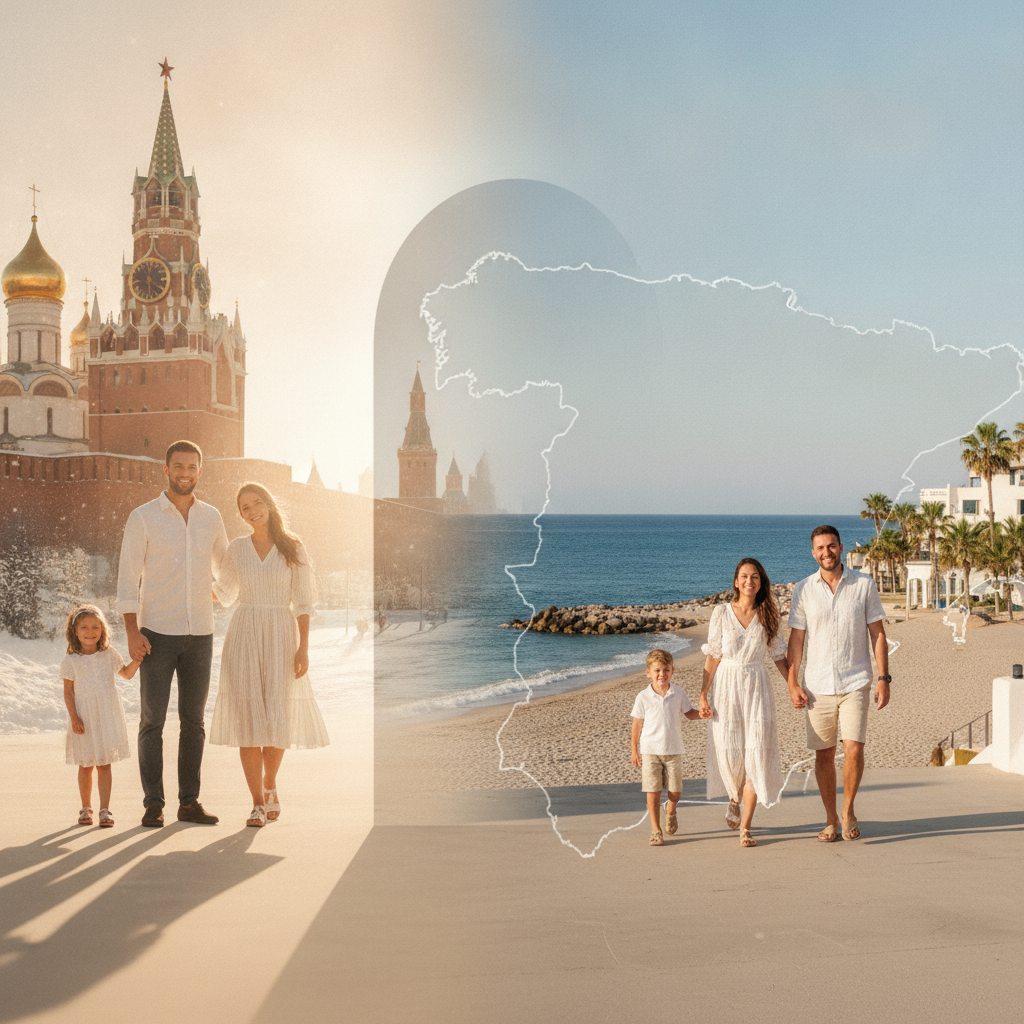
Living on the sun-drenched Costa del Sol is a dream for many, but that dream is only truly complete when shared with loved ones. For citizens of the European Union, the European Economic Area (EEA), or Switzerland who have established their residence in Spain, bringing family members to join them is a fundamental right. However, navigating the bureaucratic landscape of family reunification under the EU regime in Spain can be complex and demanding without professional legal guidance.
Understanding the Concept of Family Reunification under the EU Regime in Spain
Family reunification under the EU regime in Spain (known in legal terms as "reagrupación familiar en régimen comunitario") refers to the legal process that allows family members of an EU/EEA or Swiss citizen to reside and work in Spain. This process is significantly more streamlined and offers more benefits than the general immigration regime applied to non-EU citizens. It is rooted in the principle of freedom of movement within the European Union, ensuring that families are not separated by national borders while exercising their right to live in another member state.
Victoria Malkova, a specialized lawyer based in the heart of Costa del Sol, provides expert assistance to international clients looking to secure their family’s future in Spain. Whether you are living in Marbella, Malaga, or Estepona, understanding the nuances of these laws is the first step toward a successful application and a peaceful life in the Mediterranean.
Who is Eligible for Family Reunification?
Not every relative qualifies under this specific, more favorable regime. The Spanish law explicitly defines who can be considered a beneficiary of an EU citizen's right to residence. The primary applicant (the "reunifier") must be a citizen of an EU member state, Iceland, Liechtenstein, Norway, or Switzerland, and must be living or planning to live in Spain for more than three months. The family members who can apply for the residence card include:
1. The spouse, provided there has been no annulment, divorce, or legal separation.
2. The partner with whom the EU citizen maintains a union similar to a marital relationship, registered in a public registry in an EU/EEA country, or an unregistered partner if stable cohabitation for at least one year can be proven.
3. Direct descendants (children) of the EU citizen or their spouse/partner who are under 21 years old, or over 21 if they can prove they are financially dependent on the EU citizen.
4. Direct ascendants (parents) of the EU citizen or their spouse/partner who are financially dependent and require support.
5. Other family members who, in their country of origin, were dependents or lived with the EU citizen, or those who have serious health grounds requiring the EU citizen to take personal charge of them.
Key Requirements for a Successful Application
To successfully navigate family reunification under the EU regime in Spain, the EU citizen residing in the country must demonstrate that they have sufficient resources to support themselves and their family members. This is a critical point to ensure that the family does not become a burden on the Spanish social assistance system during their period of residence.
Proof of financial means can include an employment contract, proof of self-employment (autónomo), or evidence of sufficient funds (such as bank statements) along with comprehensive private or public health insurance that provides coverage in Spain equivalent to that provided by the National Health System. Victoria Malkova emphasizes to her clients in Costa del Sol that the "dependency" aspect for children over 21 or parents is one of the most scrutinized parts of the application. Providing a clear and consistent paper trail of financial transfers or shared living arrangements is vital for approval.
The Legal Process: Step-by-Step
The process generally begins once the family member enters Spanish territory. While some nationalities require a "Schengen Visa for Family Members of EU Citizens" to enter the country, others may enter as tourists. Once in Spain, the applicant has 90 days to apply for the "Tarjeta de Residencia de Familiar de Ciudadano de la Unión" (Residence Card for Family Members of an EU Citizen).
The application is submitted to the Foreigners' Office (Extranjería) in the province where the EU citizen resides—for many of Victoria Malkova’s clients, this is the Malaga province. The authorities have a legal timeframe of three months to issue a resolution. Once approved, the family member will receive a residence card that is valid for five years, granting them the right to live and work in Spain under almost the same conditions as Spanish citizens.
For more detailed information on the rights of EU citizens and their families, you can consult the official European Commission website, which outlines the overarching legal framework for movement and residence within the Union.
Why Consult Victoria Malkova in Costa del Sol?
The legal requirements for family reunification under the EU regime in Spain may seem straightforward on paper, but the reality of administrative procedures in Spain can be daunting. Language barriers, specific local requirements at different Extranjería offices, and the meticulous nature of the required documentation can lead to unnecessary delays or even denials.
Victoria Malkova offers a bridge between the Russian-speaking community, international expats, and the Spanish legal system. Located in the Costa del Sol, she understands the local administrative landscape and provides personalized legal strategies to ensure that families are reunited as quickly as possible. From checking the validity of foreign marriage certificates and ensuring they are properly apostilled and translated, to proving financial dependency through rigorous evidence, her expertise minimizes the risk of legal setbacks.
Moving to Spain is a life-changing decision. Ensuring that your spouse, children, or parents can legally reside with you is the most important step in making the Costa del Sol your permanent home. If you are seeking professional assistance with family reunification under the EU regime in Spain, contact the law office of Victoria Malkova to schedule a consultation and begin your journey toward a secure and happy family life in the sun.