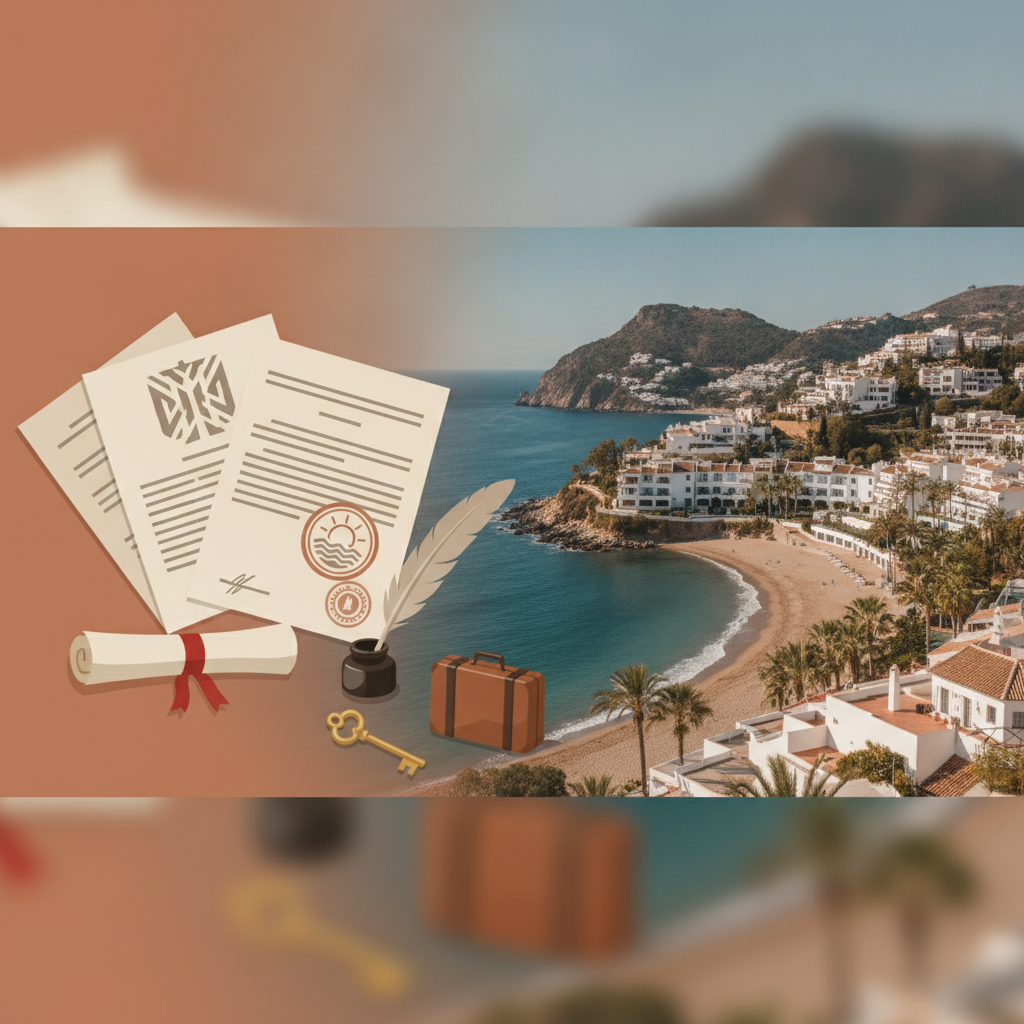
Inheriting property or assets in a foreign country is a complex process that involves navigating two different legal systems. For international residents and non-residents on the Costa del Sol, inheriting assets in Spain requires meticulous attention to detail, particularly regarding the validation of foreign documents. My name is Victoria Malkova, a lawyer specializing in Spanish law for the international community, and I frequently assist clients in bridging the gap between their home countries and the Spanish administration.
One of the most critical aspects of this process is ensuring that your foreign documents are legally recognized in Spain. This brings us to a fundamental requirement: Sworn Translation and Hague Apostille in inheritance procedures for foreigners. Without these two elements, even the most legitimate documents will be rejected by Spanish notaries, land registries, and banks.
What is the Hague Apostille and Why Is It Necessary?
The Hague Apostille is an international certification that simplifies the legalization of documents to be used in countries that are party to the 1961 Hague Convention. Spain is a signatory, along with many other nations including Russia, the United Kingdom, and the United States. The Apostille confirms the authenticity of the signature and the capacity in which the person signing the document has acted.
In the context of an inheritance, the Spanish authorities need to be certain that the documents issued abroad—such as death certificates, last wills, or certificates of succession—are genuine. The Apostille is the standard method of providing this certainty. It is important to note that the Apostille must be obtained in the country where the document was issued. For example, if the deceased passed away in Moscow, the death certificate must be apostilled in Russia before it can be presented to a Spanish notary.
For more detailed information on the international standards and the list of member countries, you can visit the official Hague Conference on Private International Law (HCCH) website.
The Critical Role of Sworn Translation
Once your documents are apostilled, the next step is the "Traducción Jurada" or Sworn Translation. In Spain, any document not written in Spanish must be translated by an official translator appointed by the Spanish Ministry of Foreign Affairs, European Union, and Cooperation (MAEC). A standard translation provided by a commercial agency or an unofficial translator will not suffice for legal inheritance procedures.
A Sworn Translator acts as a public attester, certifying that the translation is a faithful and complete reflection of the original document. This translation must include the translator's signature, seal, and a specific certification formula. In inheritance cases, accurately translating legal terminology is vital. Terms related to "probate," "executors," or "forced heirship" must be translated with legal precision to avoid misinterpretation by the Spanish notary or the Land Registry.
Essential Documents for Inheritance Procedures in Spain
When a foreigner passes away leaving assets on the Costa del Sol, several foreign documents typically require Sworn Translation and the Hague Apostille. These include:
1. Death Certificate: This is the primary document required to trigger the inheritance process. It must be an official extract from the civil registry of the country of death.
2. The Foreign Will: If the deceased left a will in their home country that covers Spanish assets, the original or a certified copy must be apostilled and translated.
3. Certificate of Succession or Grant of Probate: In many jurisdictions, these documents prove who the legal heirs are. In Spain, they are essential for the "Adjudicación de Herencia" (Acceptance of Inheritance) deed.
4. Birth and Marriage Certificates: These are often required to prove the relationship between the deceased and the heirs, especially when claiming tax exemptions or reductions based on kinship.
Why Experience Matters on the Costa del Sol
The Costa del Sol is a melting pot of nationalities. Whether you are from Russia, Northern Europe, or North America, the local regulations in Andalusia regarding inheritance tax and procedural requirements can be intricate. As a lawyer based in this region, I understand the specific demands of the local registries and tax authorities (Agencia Tributaria).
Handling "Sworn Translation and Hague Apostille in inheritance procedures for foreigners" is not just about the paperwork; it is about timing. In Spain, there is a strict six-month deadline from the date of death to file and pay inheritance taxes (Impuesto de Sucesiones y Donaciones). Delays in obtaining apostilles or waiting for sworn translations can lead to financial penalties and interest. Having a legal professional who can coordinate these services efficiently is paramount to a smooth transition of assets.
How Victoria Malkova Can Assist You
The loss of a loved one is a difficult time, and the added burden of foreign bureaucracy can feel overwhelming. My firm provides a comprehensive service for international clients, ensuring that every document meets the strict criteria of the Spanish legal system. We handle the communication with foreign consulates, coordinate with trusted sworn translators, and ensure that the Hague Apostille is correctly applied to all necessary documentation.
By centralizing the management of your inheritance case, we minimize the risk of errors and ensure that you meet all legal deadlines. Whether you are dealing with a property in Marbella, accounts in Estepona, or investments in Malaga, my goal is to provide clarity and peace of mind during the legal transfer of your family’s legacy.
If you find yourself in a position where you must manage an inheritance in Spain involving foreign documents, do not leave the formalities to chance. The combination of Sworn Translation and the Hague Apostille is the foundation upon which a successful inheritance claim is built. Contact my office today to ensure your legal matters are handled with the professional expertise they deserve.