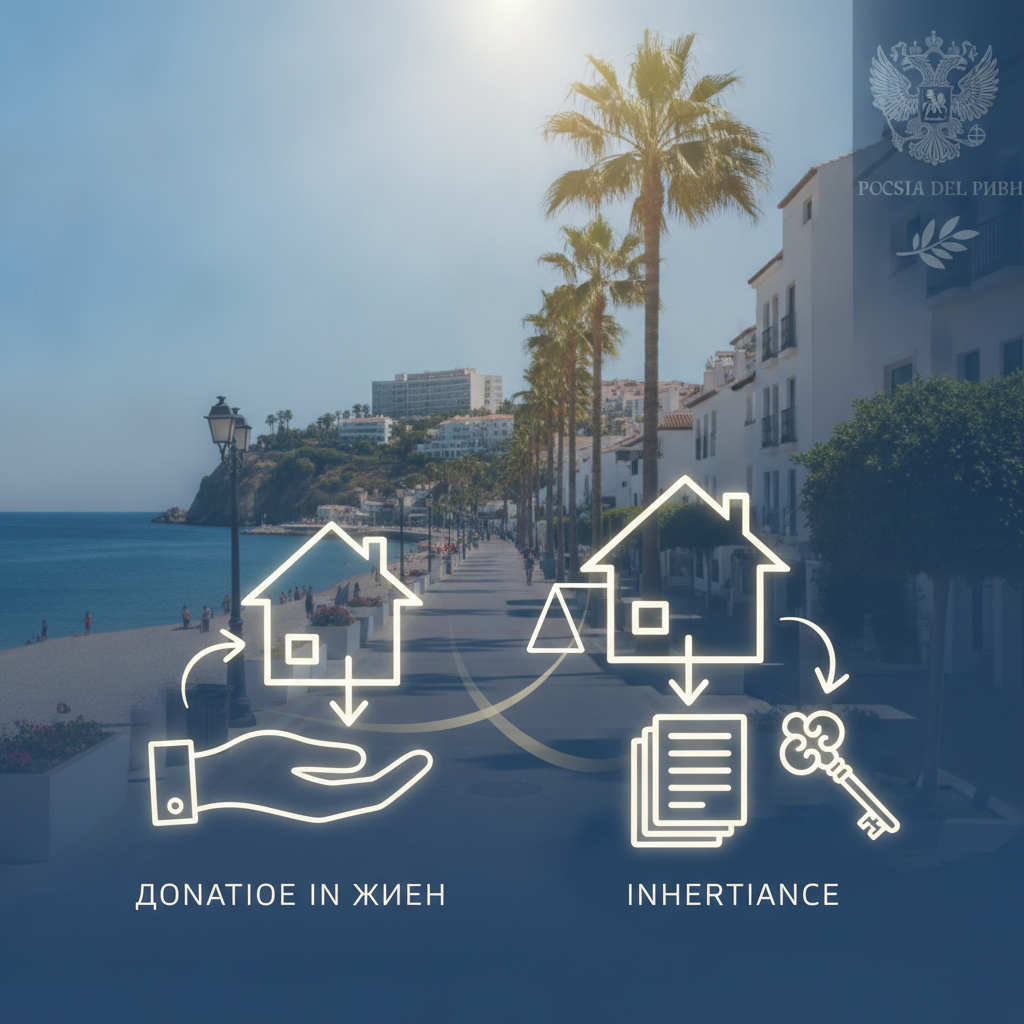
When managing significant assets in a foreign country, strategic planning is essential to ensure that your wealth is passed on to the next generation in the most efficient way possible. As a Russian lawyer practicing in the heart of the Costa del Sol, I, Victoria Malkova, frequently assist international clients in navigating the complexities of Spanish property law. One of the most common dilemmas my clients face is whether to transfer property now or wait: Lifetime property donations in Spain: Is it better than leaving an inheritance?
Understanding the Basics: Donation vs. Inheritance
In Spain, the transfer of property can happen in two primary ways: through a "Donación" (a gift made during your lifetime) or through "Sucesión" (inheritance after death). Both methods are governed by the Spanish Succession and Gift Tax (Impuesto sobre Sucesiones y Donaciones), but they are treated differently by the tax authorities and have distinct legal implications.
The choice between these two options depends heavily on your specific financial situation, the location of the property, and the current regional legislation. In the Costa del Sol, which falls under the jurisdiction of Andalusia, the legal landscape has become increasingly favorable for families, but professional guidance remains vital to avoid unexpected tax traps.
The Tax Implications of Lifetime Property Donations
When you choose a lifetime property donation in Spain, several taxes come into play. It is not as simple as signing a deed; the Spanish Tax Agency views this as a taxable event for both the donor and the recipient.
First, the recipient must pay the Gift Tax. The rate varies depending on the relationship between the donor and the recipient and the autonomous community where the property is located. Fortunately, Andalusia currently offers significant bonifications (tax reliefs) for direct descendants, spouses, and parents, often reaching a 99% reduction in the tax base under specific conditions.
Second, the donor may be liable for Personal Income Tax (IRPF). If the property's value has increased since you purchased it, the Spanish government considers this a "capital gain," even if you are giving the property away for free. However, there are exemptions, particularly for those over 65 years of age who are donating their primary residence.
Finally, there is the "Plusvalía" tax (a local tax on the increase in land value), which is paid to the town hall (Ayuntamiento) where the property is situated, such as Marbella, Estepona, or Mijas.
Is Inheritance the More Affordable Option?
Historically, many advisors suggested waiting for inheritance because the tax benefits were superior. When a property is inherited, the "capital gains" tax (IRPF) for the deceased is not triggered. This is known as the "deathbed update," where the value of the property is updated to its current market value without the deceased's estate paying tax on the historical gain.
Furthermore, in Andalusia, inheritance tax for close family members has been virtually eliminated for estates under a certain threshold, thanks to a 99% tax credit implemented by the regional government. This makes leaving an inheritance a very attractive option for those looking to minimize the tax burden on their heirs.
However, inheritance comes with its own set of challenges, including the potential for legal disputes among heirs and the lengthy probate process, which can freeze assets for months. For more detailed information on the official tax rates and regulations, you can visit the Spanish Tax Agency (Agencia Tributaria) website.
The Advantages of Lifetime Donations in the Costa del Sol
If inheritance is often cheaper, why consider lifetime property donations in Spain: Is it better than leaving an inheritance? The answer lies in control and peace of mind. By donating a property now, you can:
- Ensure a smooth transition: You decide exactly who receives the property and when, avoiding the uncertainties of the probate process.
- Provide immediate support: You may want to help your children establish themselves in Spain while you are still around to see them enjoy the home.
- Retain Use: You can donate the "nuda propiedad" (bare ownership) while retaining the "usufructo" (the right to live in or rent out the property) for the rest of your life.
- Lock in current tax benefits: Tax laws change frequently. By donating under the current favorable Andalusian regulations, you protect your estate from potential future tax increases.
Key Considerations for Foreign Residents and Non-Residents
As a Russian-speaking lawyer in Spain, I specialize in the unique circumstances of non-EU residents. It is important to note that tax obligations in your home country might still apply. International tax treaties play a crucial role in preventing double taxation. Whether you are a resident of Marbella or living abroad with assets in the Costa del Sol, the interaction between Spanish law and international regulations is complex.
Moreover, the valuation of the property is critical. The Spanish government now uses the "Valor de Referencia" (Reference Value) from the Catastro to determine the minimum tax base. Underestimating the value of your property during a donation can lead to significant penalties and audits.
Conclusion: Which Strategy Should You Choose?
There is no one-size-fits-all answer to the question: Lifetime property donations in Spain: Is it better than leaving an inheritance? If your priority is minimizing immediate costs and you are under 65, inheritance might be the better financial route. However, if you wish to organize your estate effectively, provide for your family immediately, and take advantage of current regional tax breaks in Andalusia, a donation could be the superior strategy.
Every family’s situation is unique. Factors such as your age, the value of the property, your residency status, and your long-term goals must be carefully weighed. At the law office of Victoria Malkova, we provide tailored legal advice to help you make the most informed decision for your future in the Costa del Sol.
Contact us today to schedule a consultation and ensure your Spanish assets are handled with the professional care they deserve.